Three days is enough for Bangkok if you stop trying to see all of it. It is not enough if you have built a list from six different articles and plan to cross the city four times a day.
The plan below runs from a single base on Sukhumvit. Mornings go out, afternoons come back, evenings stay close. Nothing here needs a car, and nothing here asks you to be at a temple gate and a weekend market on the same day, because you cannot do both and doing neither properly is worse than skipping one.
It is written the way we give it at the desk, which means it tells you what to drop as well as what to see.
The short version
- One base for all three nights. Splitting three nights across three hotels costs you two mornings.
- Day one: Grand Palace at opening, then Wat Pho, then the ferry to Wat Arun. In that order.
- The Grand Palace dress code means shoulders and ankles covered. Knee-length shorts will not get you in.
- Chatuchak only runs at weekends. If day two is midweek, go to the Jim Thompson House instead.
- Rooftops enforce smart casual. No shorts, no sandals, and book the sunset slot.
- Skip the floating markets on a three-day trip. They cost a full day each way.
Before you book
Nine Arawana addresses across Bangkok and Pattaya. Reserve through us and the SMART rate applies automatically, with no booking fees and free cancellation on most rates.
Why one base beats three hotels
Guests often plan three nights in three districts to 'see more of the city'. It reliably backfires. Two of your three mornings get eaten by packing, checking out, crossing town in traffic and waiting for a room that is not ready until two.
Bangkok is dense enough that one well-chosen base reaches everything on this list. From the Sukhumvit corridor, the old town is a metro ride, Chinatown is twenty minutes, the weekend market is a straight run north on the BTS, and dinner is downstairs.
So: unpack once. If you genuinely want two neighbourhoods, do it as two trips or add nights, not by splitting three. Where to put that single base is covered in Where to stay in Bangkok.
Good to know
- Unpack once, on Sukhumvit
- Everything below is train or boat
- Checkout mornings cost you half a day
- Ask about luggage storage on day three
Day one, morning: the old town, in this order
Grand Palace first, and early. Gates open at half past eight and the difference between arriving then and arriving at eleven is the difference between a monument and a queue in full sun. Go straight there, before breakfast if you have to.
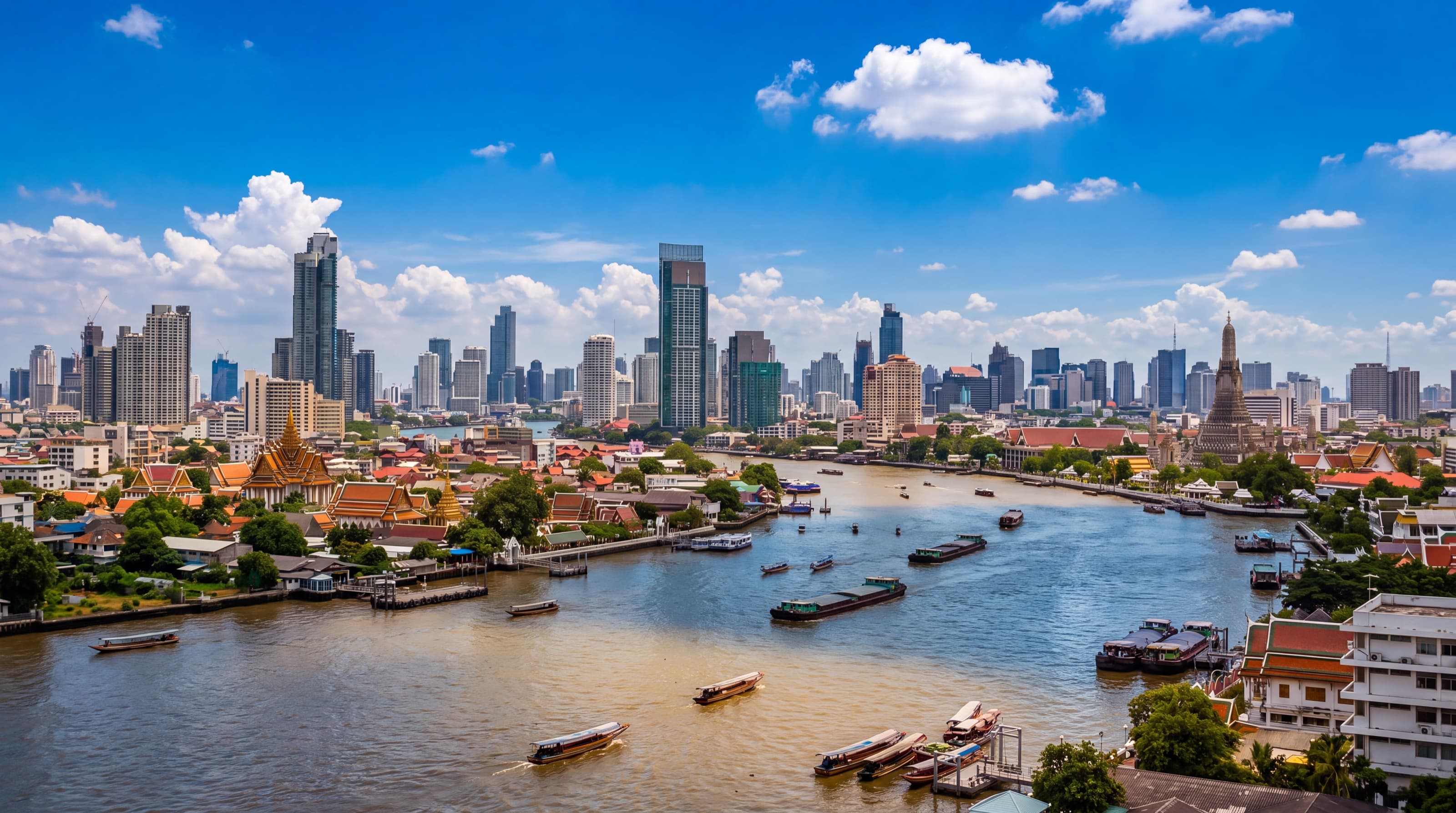
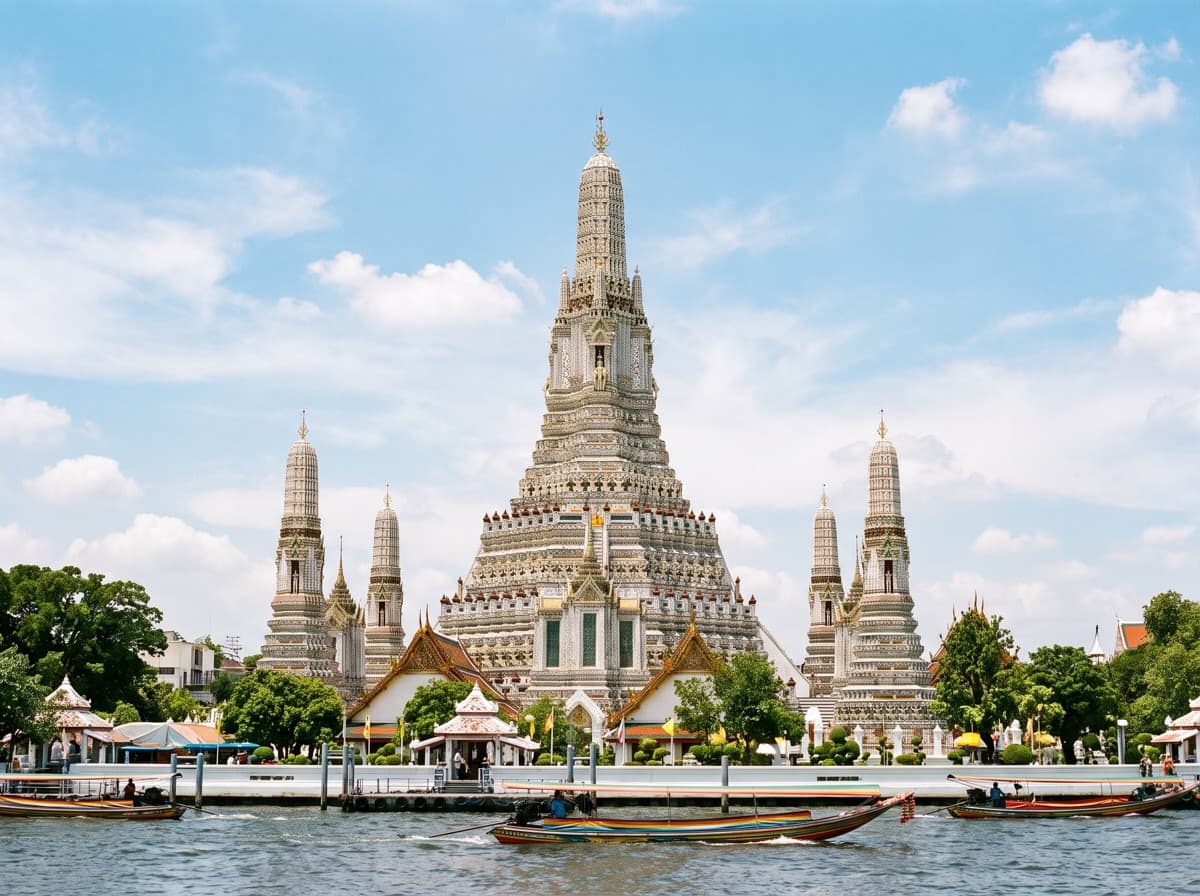
Then walk ten minutes south to Wat Pho for the reclining Buddha, which is the better temple of the two and the one people rush. Then the cross-river ferry to Wat Arun, which takes about four minutes and costs a few baht. That order matters: it runs with the heat and the crowds instead of against them, and it ends on the far bank where the afternoon light hits the prang.
Two things to know before you go. The dress code is enforced at the Palace and it is specific, not vague: shoulders covered, and legs covered to the ankle. Not knee-length shorts, not a vest, not see-through. They will rent you a cover-up at the gate, and the queue for that is its own tax on turning up unprepared. Second, anyone who approaches you outside to say the Palace is closed today for a ceremony is lying, and the tuk-tuk waiting behind them is the reason.
Good to know
- Grand Palace opens 08:30: be there
- Shoulders and ankles covered, no exceptions
- Wat Pho next, then the ferry to Wat Arun
- "The Palace is closed today" is always a scam
Day one, afternoon: stop walking
By one o'clock on day one you will have walked several kilometres in heat you are not yet used to, and the single most common mistake we see is pushing through it. The afternoon of your first full day should be deliberately small.
Wat Pho runs a well-known traditional massage school on the temple grounds, which is the neatest possible solution to the problem you have just created for your feet, and it is right where you already are. An hour of Thai massage for a modest price, in the place the training tradition comes from.
Then take the orange-flag boat back upriver rather than a taxi. It is a working commuter service, costs very little, and gives you twenty minutes of breeze and a view of the city from the water. Get off, get the BTS, go back to the hotel and sit down. You have an evening to be awake for.
Good to know
- Massage school is on the Wat Pho grounds
- Orange-flag boat is the cheap way back
- Do not plan a big afternoon on day one
- Rehydrate before the evening, not during it
Day one, evening: Yaowarat after dark
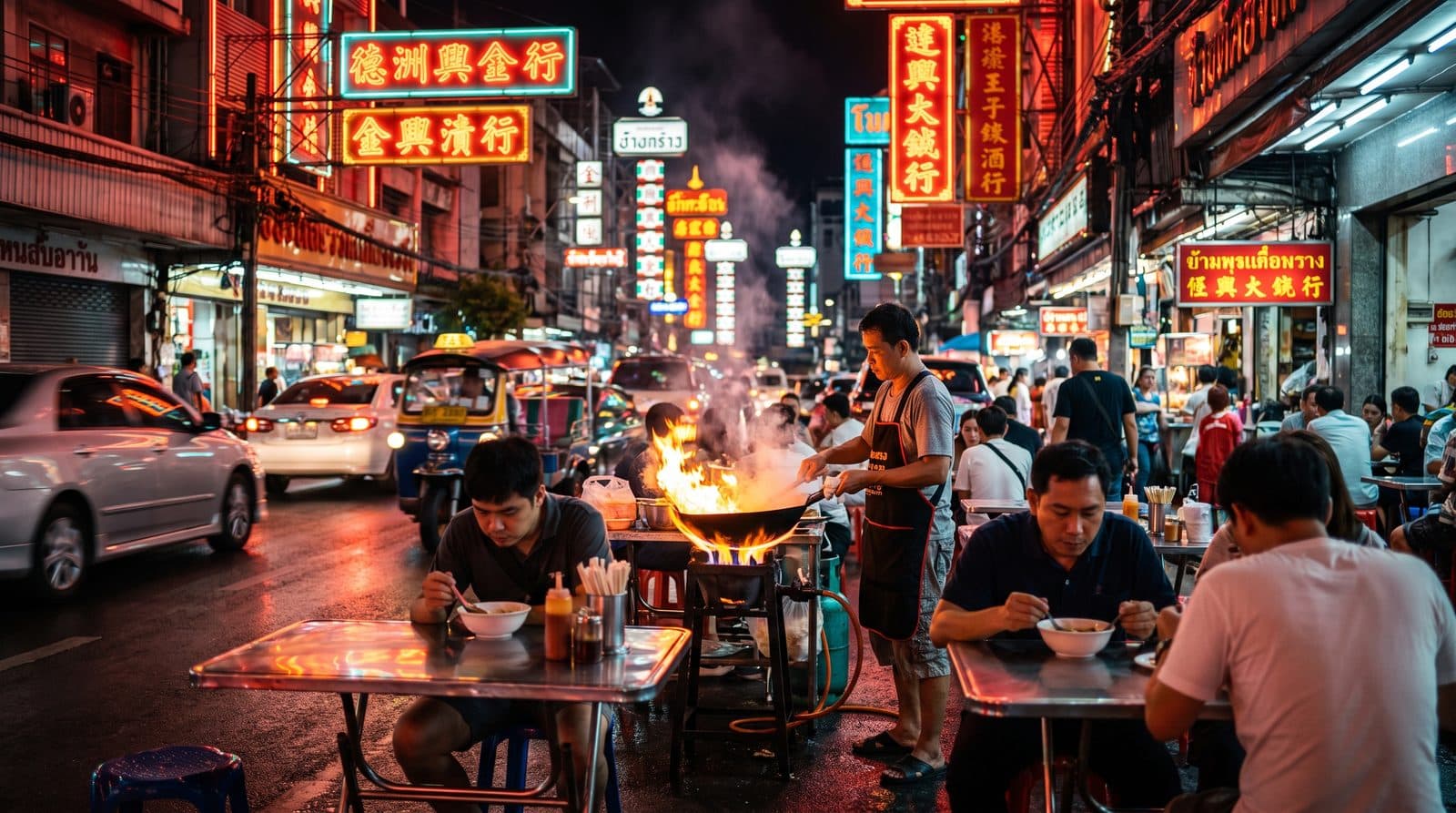
Chinatown does not really start until six, and it is properly going by eight. Before that you are looking at closed shutters and wondering what everyone is talking about. Take the MRT to Wat Mangkon and walk out into it.
Do not go with a fixed list. The method is better than any itinerary: walk the length of Yaowarat once without buying anything, see which carts have queues of Thai people and high turnover, then double back and eat at three or four of them. High turnover is the whole safety rule: food that sells fast is food that has not been sitting.
Keep it to a two-hour loop and finish with something sweet on Soi Texas. If you would rather have the route laid out properly, the district guide is A local-style guide to Chinatown Bangkok.
Good to know
- MRT Wat Mangkon is the drop
- Carts open after 18:00, busy by 20:00
- Walk it once before you eat
- Queues of locals are the quality signal
Where to stay
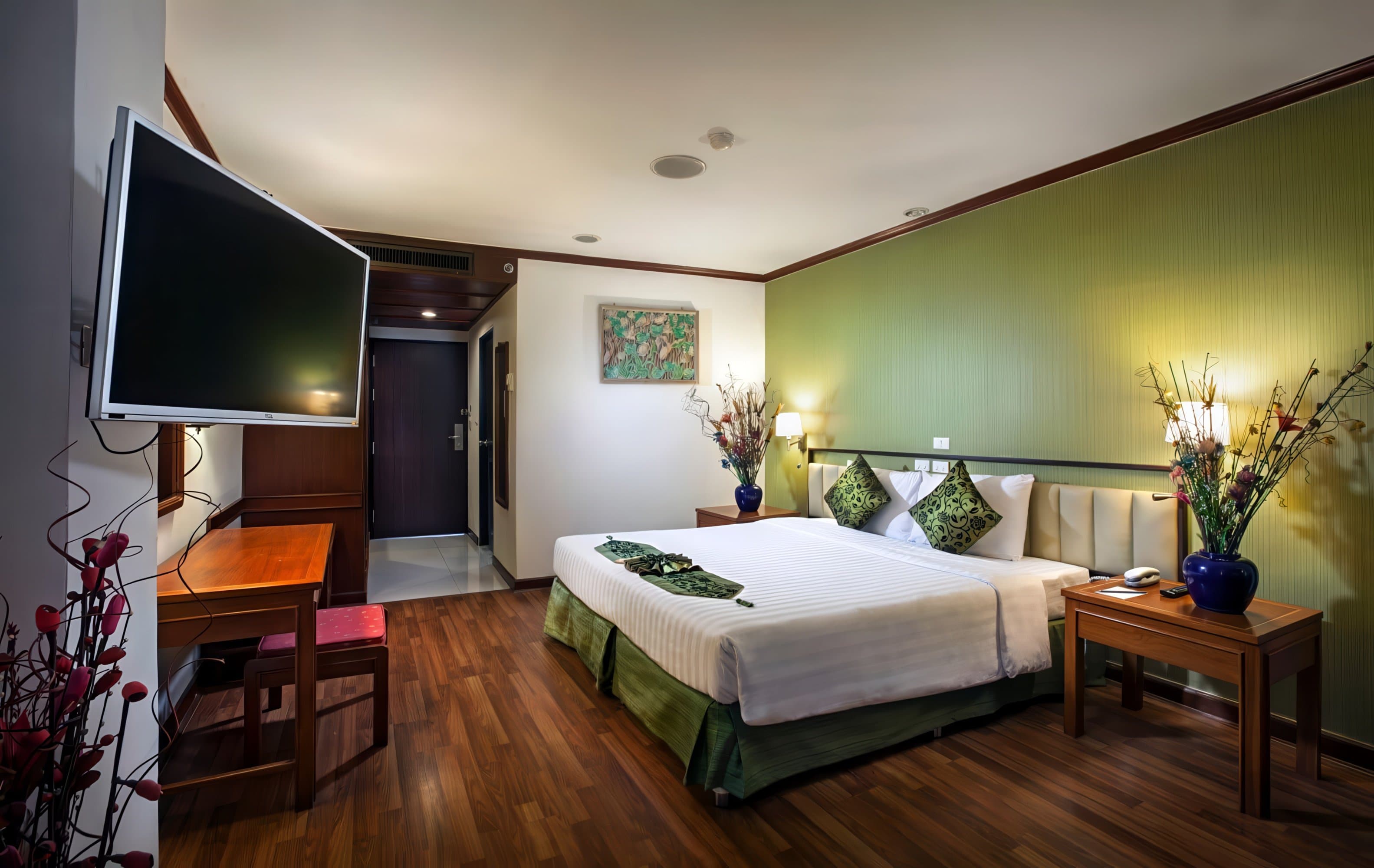
Arawana Regency Park Sukhumvit
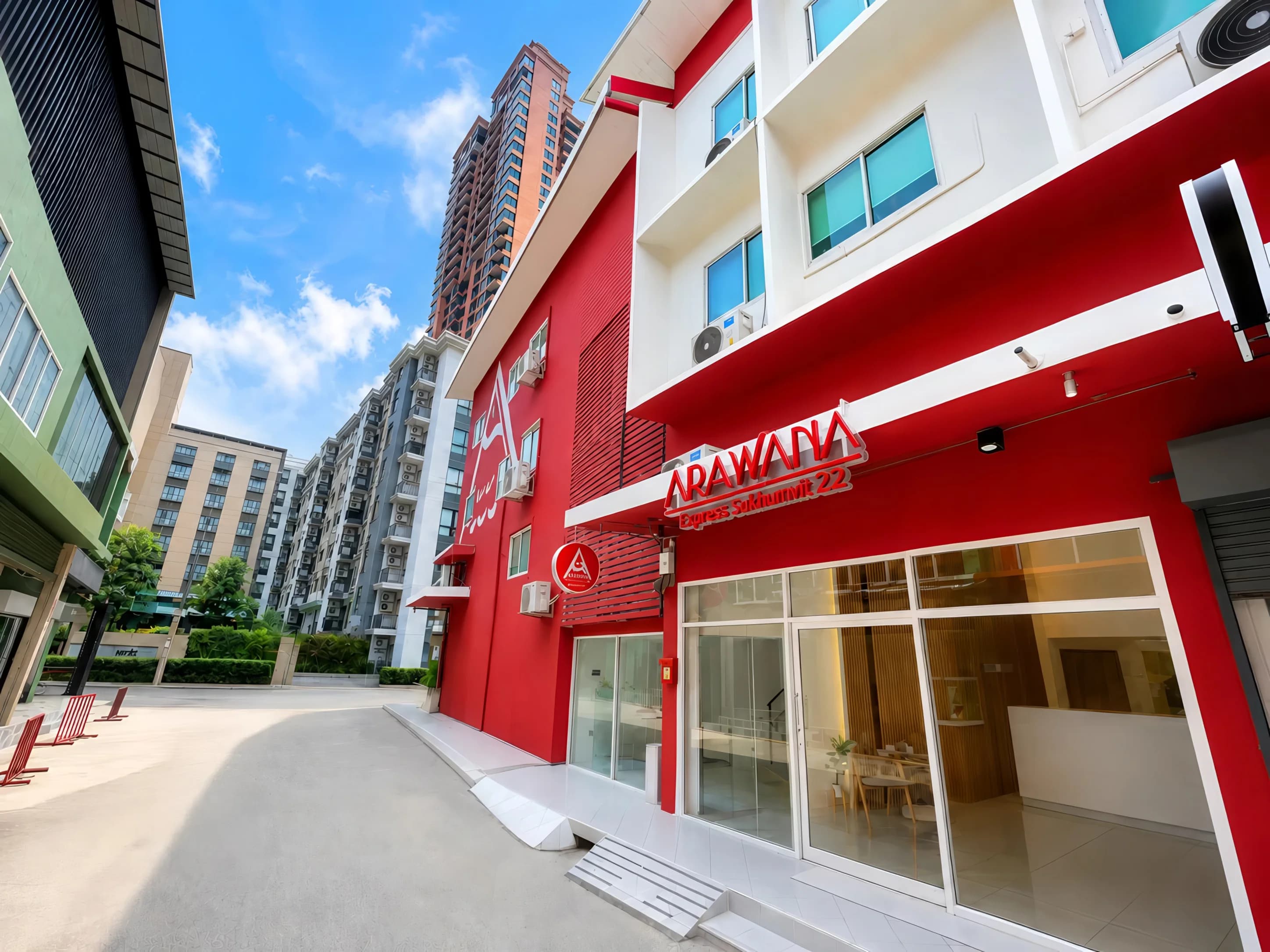
This plan runs from Sukhumvit 22, where Regency Park and Express 22 sit on the same soi about five minutes from BTS Phrom Phong. One base, three days, no checkout mornings.
Day two, morning: the market, or the house
This one depends on the day of the week, and getting it wrong is the most common scheduling error in a Bangkok trip.
If your day two is a Saturday or Sunday, go to Chatuchak. It is a straight run north on the BTS to Mo Chit, and it is enormous: fifteen thousand or so stalls across twenty-seven sections. The trick is not 'go early': it is to pick two or three sections before you leave the hotel, agree where you will exit, and accept that you are not seeing the rest. Go early as well, obviously, because by noon the middle of it is genuinely airless.
If day two falls midweek, Chatuchak is mostly shut and the substitute is the Jim Thompson House: the silk merchant's teak compound near National Stadium, kept as it was, and a genuinely good hour. Smaller ambition, better on a Tuesday than a half-empty market.
Good to know
- Chatuchak is a weekend market: Sat and Sun
- BTS Mo Chit or MRT Kamphaeng Phet
- Choose 2 or 3 sections in advance
- Midweek alternative: Jim Thompson House
Day two, afternoon: the green mile
Come back down the line and spend the hottest part of the day somewhere with trees. Benjakitti Forest Park is the best thing to happen to central Bangkok in years: a former tobacco factory site turned into wetland, with an elevated walkway that runs above the water and connects through to Lumphini Park next door.
The two parks together give you a couple of kilometres of proper walking with no traffic, which is a rarer thing here than it should be. Late afternoon is the moment: the light is long, the skyline goes gold behind the reeds, and the monitor lizards come out to be photographed by people who did not expect them.
If you would rather be horizontal, Benjasiri Park at Phrom Phong is smaller and thirty seconds from the malls, which makes it the easier version of the same idea.
Good to know
- Benjakitti connects to Lumphini on foot
- Elevated walkway over the wetland
- MRT Queen Sirikit or BTS Asok
- Late afternoon is the best light
Day two, evening: a rooftop, if you dress for it
Bangkok's rooftops are worth one evening, and the thing nobody tells you is the door policy. Most of the serious ones enforce smart casual, which in practice means no shorts, no flip-flops, no sleeveless tops on men. People get turned away every night, having travelled across the city to be turned away.
The Mahanakhon SkyWalk on Silom is the one to pick if the view is what you want rather than the drink: it is the tallest open deck in the city, it has a glass floor section that is genuinely unpleasant in the best way, and the sunset slot sells out, so book it rather than turning up.
If you want a bar instead of an observation deck, the rooftops along Sukhumvit are closer to base and less of a production. Either way, go up for sunset and come down for dinner, because rooftop food is priced for the view.
Good to know
- Smart casual is enforced: no shorts or sandals
- Book the sunset slot in advance
- BTS Chong Nonsi for Mahanakhon
- Eat afterwards, not up there
Or trade the rooftop for a fight night
Muay Thai is the better evening for a lot of people and almost nobody plans it. Rajadamnern is the historic stadium, north of the old city, and it runs on a fixed weekly schedule rather than every night, so check the card before you commit to a date.
The counterintuitive part is the ticket. Ringside is the tourist tier and it is not the better night. The upper tier is where the gambling happens, and the gambling is the atmosphere: the shouting, the hand signals, the entire block moving as one when a fight turns. You will pay less and see more of what makes it worth going.
Fights run from smallest to biggest, so the interesting bouts are late in the card. Arrive an hour in rather than at the start, and watch the crowd as much as the ring.
Good to know
- Rajadamnern runs set nights, not nightly
- Upper tier is the atmosphere, not ringside
- Best bouts are late in the card
- No BTS: take a Grab or the MRT and walk
Day three: pick one, not three
Day three is where itineraries fall apart, because people try to fit in everything they have not done yet. Pick one of these three and let the rest go.
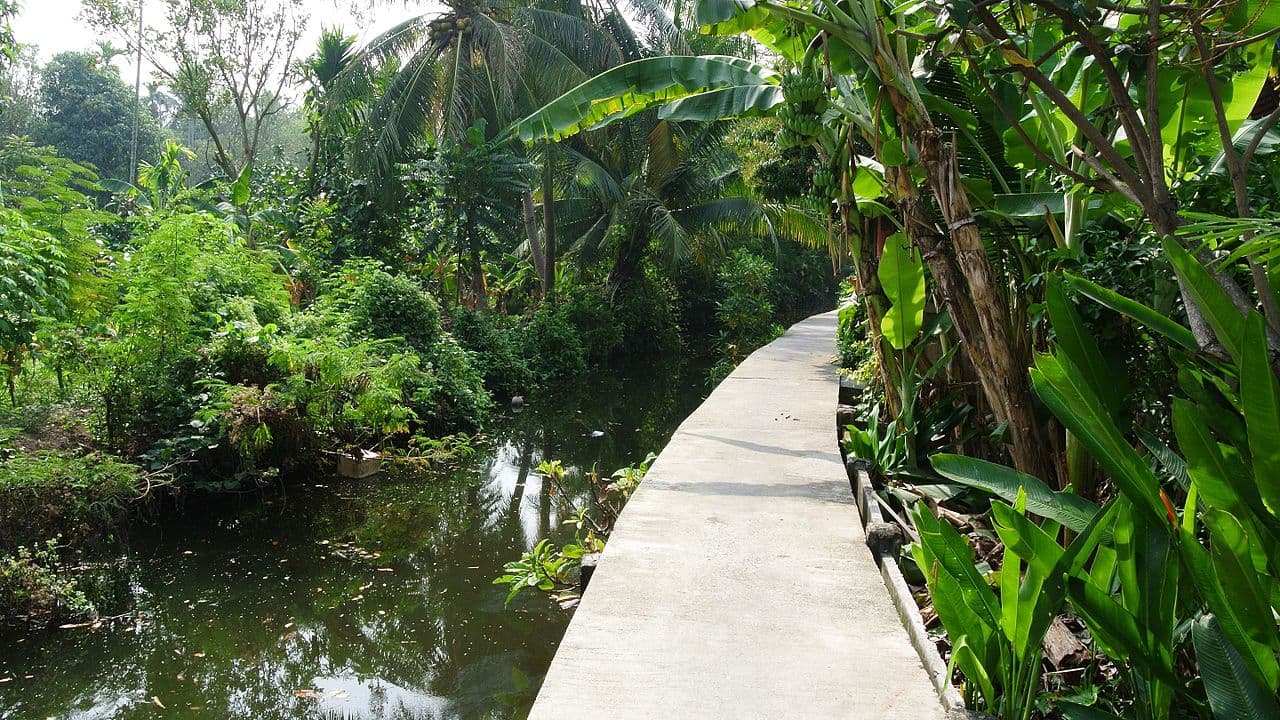
The best one, if you can ride a bicycle, is Bang Kachao: a green peninsula in a bend of the river, twenty baht and a longtail boat away from the city, where the paths run on raised concrete through mangrove and nobody is in a hurry. Out at eight, back for a late lunch. The full guide is Bang Kachao by bicycle.
The second is a slow Sukhumvit day: the Em District malls, a long lunch, an onsen or a spa, and the sois behind Phrom Phong, which is the version for people who have walked enough. The third is the one you already know you want: the thing from day one you did not finish. Go back and do that properly instead of adding something new.
Good to know
- Bang Kachao: bicycle, morning, river
- Or a slow Em District and spa day
- Or go back and finish something
- Do not add a fourth thing
What to leave out
The floating markets that appear in every Bangkok article are, with few exceptions, an hour and a half outside the city in each direction and staged for coaches. On a three-day trip they cost you a whole day for a photograph. Skip them, or come back and do them properly on a longer visit.
Skip the big aquarium and the Madame Tussauds-style attractions in the malls too, unless you are travelling with children who need them. They are the same in every city and you are not in every city.
And be careful with the gem shop, the tailor who happens to have a one-day promotion, and the friendly stranger who knows a better temple. All three are the same scheme wearing different clothes. If you do want something made, the honest version is in How to find a trustworthy tailor in Bangkok, and it needs more days than you have.
Good to know
- Floating markets cost a full day
- Mall attractions are the same everywhere
- One-day tailor deals are not deals
- Strangers redirecting you are working
Getting between all of it
Buy a stored-value Rabbit card at any BTS counter on the first morning if you are here three days or more. It saves queueing at a machine every single time, which adds up fast when four of the trips below are on the same line.
The MRT runs on its own separate card and its own tokens, which is mildly annoying and worth knowing before you stand at the wrong gate. The Chao Phraya orange-flag boat takes cash on board. Grab is for the gaps: after midnight, in rain, and to the stadium.
The one piece of arithmetic that matters: between about four and seven in the evening, a three-kilometre car journey can lose to walking, and will almost always lose to the train. If the train goes there, take the train, even if the map makes the car look shorter.
Good to know
- Rabbit card for the BTS, separate card for MRT
- Orange-flag river boat takes cash
- Grab for late nights and rain
- 16:00 to 19:00: never choose the car
Ways to string it together
The three days, condensed
One base on Sukhumvit. Everything by train, boat or on foot.
- Day 1 morning: Grand Palace at 08:30, walk to Wat Pho, ferry across to Wat Arun.
- Day 1 afternoon: massage at the Wat Pho school, orange-flag boat back, rest.
- Day 1 evening: MRT to Wat Mangkon, walk Yaowarat once, then eat your way back.
- Day 2 morning: Chatuchak if it is a weekend, Jim Thompson House if it is not.
- Day 2 afternoon: Benjakitti Forest Park through to Lumphini, late light.
- Day 2 evening: Mahanakhon SkyWalk for sunset, or Rajadamnern for a fight card.
- Day 3: Bang Kachao by bicycle, or a slow Em District day. One thing only.
- Day 3 evening: leave the bags at the desk, eat on Soi 22, go to the airport.
If it rains all day
The wet-season version. Rain here is usually an hour, but plan for the day it is not.
- Swap the temples for the Em District: three malls connected by skywalk at Phrom Phong.
- Add an onsen or a long Thai massage. This is the right day for it.
- Do Chinatown anyway. Yaowarat is largely covered and rain thins the crowd.
- Move the rooftop to the last clear evening you get, and book it late.
If you only have two days
Cut day two, not day one. The old town is the part you cannot get anywhere else.
- Day 1: run the full old-town morning and the Yaowarat evening, unchanged.
- Day 2 morning: Benjakitti and Lumphini, early, before the heat.
- Day 2 afternoon: the Em District malls and a massage near the hotel.
- Day 2 evening: rooftop at sunset, dinner back on Sukhumvit.
Planning your visit
- Start earlier than feels reasonable
- Between about eleven and three the heat stops being a background condition and starts being the thing you are dealing with. Everything outdoors in this plan is scheduled before eleven or after four, and that is the single biggest reason it works.
- Dress for the temples on day one
- Shoulders covered and legs covered to the ankle, for everyone. Light long trousers or a long skirt, and a shirt with sleeves. Wear it from the hotel rather than renting a cover-up at the gate, and pick shoes you can slip off, because you will be doing that repeatedly.
- Carry small notes and some cash
- Street food, the river boat and the market stalls are cash, and nobody at a food cart wants a thousand-baht note at seven in the evening. Break your notes at a convenience store early in the day.
- Use the desk on the last morning
- Late checkout is often possible if you ask the night before rather than on the day. If it is not, leave the bags with us, spend the day properly and collect them on the way to the airport. That is the difference between three days and two and a half.
- Do not book the airport transfer for rush hour
- Leaving Sukhumvit for Suvarnabhumi between four and seven can take twice as long as the same trip at ten in the morning. If you have an evening flight, take the Airport Rail Link from Makkasan or Phaya Thai instead of a car.
Three days is a real trip if you let each day have one shape: a morning out, an afternoon close, an evening within reach. The plan above is the one we actually give at the desk, and the most useful part of it is the things it leaves out. Book the base first: Where to stay in Bangkok covers that, and if the third day is still open, make it Bang Kachao.

Written by
Nalinee Boonmee
Guest Manager, Arawana Group
Nalinee leads guest experience across all eight Arawana properties. She works with each front desk team so bookings, check-ins, and day-to-day stays run smoothly.
Written with the desks at Arawana Regency Park Sukhumvit and Arawana Express Chinatown, from the version we give guests on arrival. Opening hours, fight cards and rooftop booking policies move: check each one the day before rather than trusting a schedule printed here.