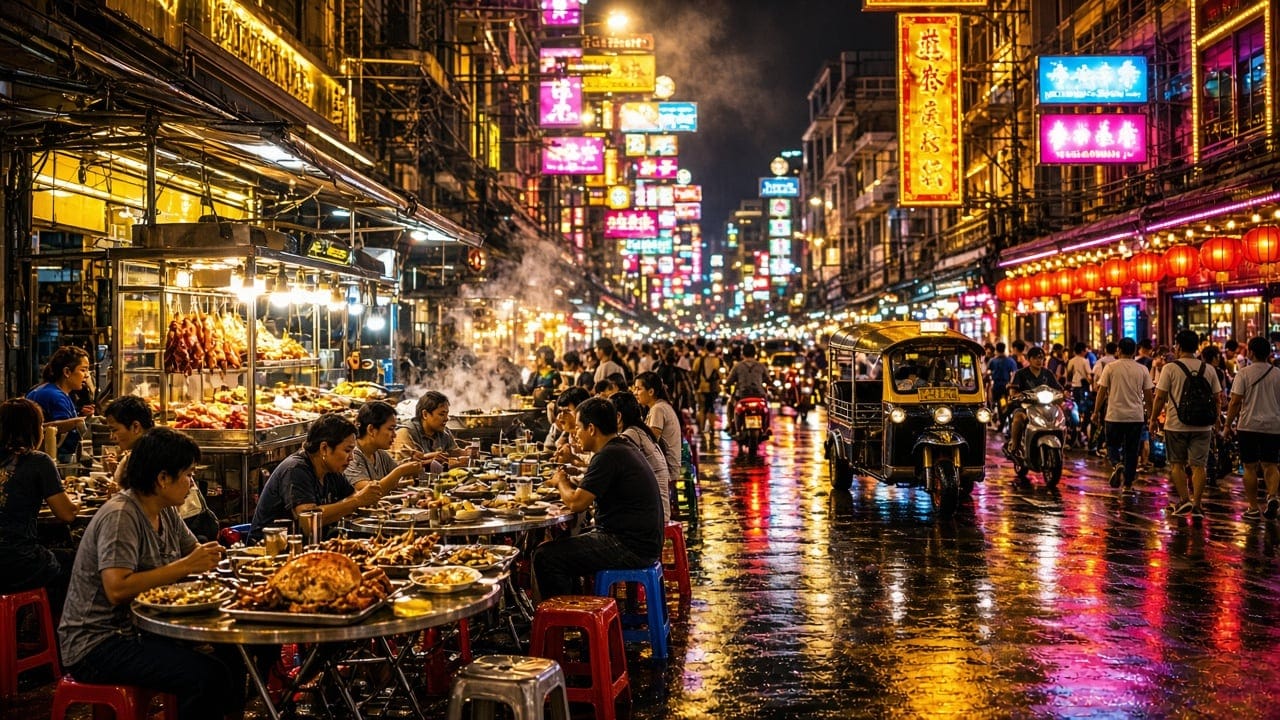
Bangkok's Chinatown — Yaowarat and its side alleys — is one of Asia's great street-food destinations. Gold shops glitter by day; at night the main road becomes a kilometre-long open-air kitchen of crab curries, peppery noodle soup and charcoal-grilled seafood. We operate Arawana Express Chinatown steps from MRT Wat Mangkon, so our team eats here daily. This guide covers where to eat, what to explore beyond the food, and how to plan a full day in the neighbourhood without missing the good stuff.
The short version
- Most legendary street-food stalls open after 5pm — plan dinner, not lunch, on Yaowarat Road.
- MRT Wat Mangkon puts you inside the neighbourhood; the Chao Phraya River is a short walk for Grand Palace day trips.
- Bring cash in small notes — few stalls accept cards and queues move faster with exact change.
- Talat Noi and Sampeng Market offer daytime exploration when the food stalls are still closed.
- Arawana Express Chinatown is a 3-minute walk from Yaowarat Road and MRT Wat Mangkon.
Guay Jub Ouan Pochana
Guay Jub Ouan (ก๋วยจั๊บอ้วนโภชนา) is the peppery rolled-rice-noodle soup that locals queue for on Yaowarat Road. The broth is dark, peppery and rich with pork offal — not for everyone, but devotees call it the best guay jub in Bangkok.
Find the stall on Yaowarat Road near Soi 11. Ordering is simple: point at the pot, take a seat on the plastic stools, and pay when served. A bowl costs around 60–80 baht. Open roughly 6pm–1am; weekends see the longest queues.
Good to know
- Yaowarat Road — 3 min walk from MRT Wat Mangkon
- Famous peppery guay jub (rolled rice noodles in dark broth)
- ~60–80 baht per bowl; cash only
- Open ~6pm–1am; queue 15–30 min on weekends
T&K Seafood
T&K Seafood is the green-shirted institution on Yaowarat Road — plastic tables spilling onto the pavement, tanks of live crab, and waiters shouting orders over the sizzle of woks. Grilled prawns, pepper crab and tom yum goong are the staples.
Prices are fair for the quality and portion size: expect 400–800 baht per person depending on how adventurous you get with seafood. No reservations — arrive before 7pm on weekends or wait for a table. Cash and cards accepted.
Good to know
- Yaowarat Road — look for staff in green shirts
- Grilled prawns, pepper crab, tom yum goong
- ~400–800 baht/person; cards accepted
- Arrive before 7pm weekends to shorten the wait
Wat Mangkon Kamalawat
Wat Mangkon Kamalawat — the Dragon Lotus Temple — is Bangkok's largest and most active Chinese Buddhist temple. Incense smoke drifts through courtyards filled with dragon statues, red lanterns and worshippers lighting candles for the lunar calendar festivals.
The temple is free to enter and open daily from early morning. Dress modestly (cover shoulders and knees) and remove shoes before entering shrine halls. It sits directly above MRT Wat Mangkon (exit 1), making it the natural first stop on a Chinatown walking tour.
Good to know
- Charoen Krung Road — above MRT Wat Mangkon (exit 1)
- Free entry; open daily from ~6am
- Dress modestly; remove shoes in shrine halls
- Busiest during Chinese New Year and Vegetarian Festival
Talat Noi
Talat Noi is Chinatown's creative edge — a riverside neighbourhood of crumbling shophouses, street art murals, antique shops and third-wave coffee cafes. Wander Soi Wanit 2 for graffiti walls, peek into woodcarving workshops, and stop at Hubba Coworking's cafe for an air-conditioned break.
It is quiet compared to Yaowarat and best explored on foot in the late morning. The Chao Phraya River is at the western edge — follow the alleys until you smell the water. Allow 90 minutes to explore properly.
Good to know
- South of Yaowarat, toward the river — 10 min walk
- Street art, antique shops and riverside cafes
- Best late morning before the midday heat
- Connects to Ratchawong Pier for river boats
Where to stay
Arawana Regency Park Sukhumvit
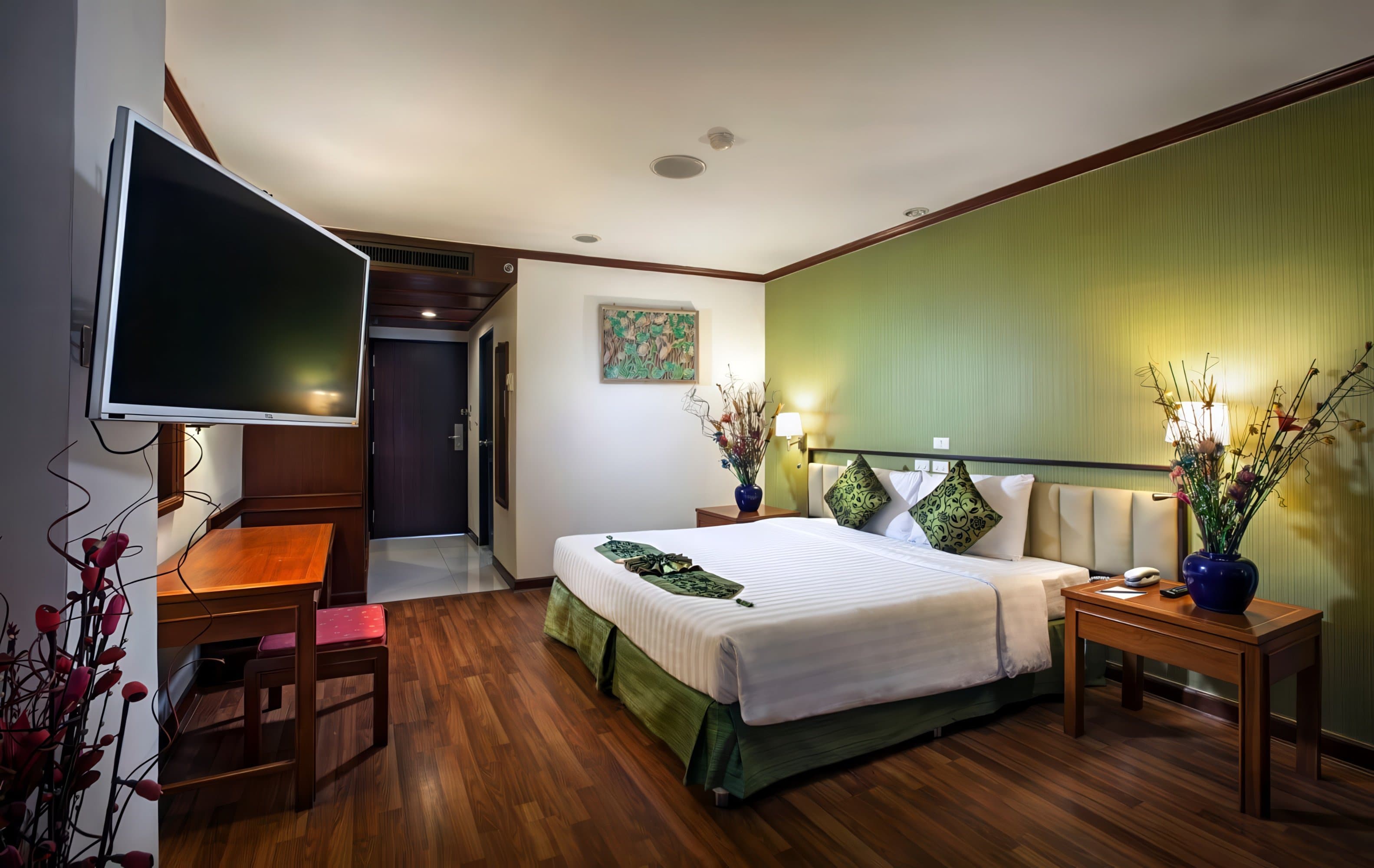
Want to be in the heart of it all? Arawana Express Chinatown sits on Charoen Krung Road, three minutes from Yaowarat and right beside MRT Wat Mangkon. Modern rooms with kitchenettes, digital check-in, and code SMART for our best direct rate.
Sampeng Market
Sampeng Lane is a narrow wholesale alley running parallel to Yaowarat — cramped, chaotic and endlessly fascinating. Vendors sell fabrics, beads, toys, stationery and party supplies at wholesale prices. The lane is barely shoulder-width in places, so expect to shuffle single-file behind shopping trolleys.
Go on weekday mornings when wholesalers are restocking. Prices drop if you buy in bulk, but even single items are cheap. Not a food market — come here for the sheer sensory overload and bargain hunting.
Good to know
- Sampeng Lane, north of Yaowarat — 8 min walk
- Wholesale fabrics, beads, toys and party supplies
- Weekday mornings are least crowded
- Narrow alley — not ideal with large bags or strollers
Yaowarat Road at Night
When the sun drops, Yaowarat Road transforms. Woks flame, neon reflects off gold-shop windows, and the entire 1.5 km strip becomes one continuous food court. Beyond the famous names, look for mango sticky rice carts, barbecued pork skewers, bird's nest soup vendors, black sesame dumplings at Sweet Time Dessert Stall, and fresh durian stalls in season.
Walk the full length from Odeon Circle to Ratchawong at least once. Eat small portions at multiple stalls rather than one big meal — that is how locals do it. Most vendors open around 5pm and wind down after midnight.
Good to know
- The full strip runs 1.5 km from Odeon Circle to Ratchawong
- Peak hours 6–10pm; most stalls close after midnight
- Eat small at many stalls — portions are generous
- Cash essential; ATMs at 7-Eleven along the road
Odeon Circle & Chinatown Gate
The Chinatown Gate (Paifang) at Odeon Circle marks the ceremonial entrance to Yaowarat on Charoen Krung Road. The red archway with gold dragons is the neighbourhood's most photographed landmark and a natural meeting point before a food crawl.
The circle itself is a roundabout with a clock tower — traffic is heavy, so cross carefully. From here you can walk north into Sampeng or south onto Yaowarat Road. Best photographed at dusk when the gate lights up.
Good to know
- Charoen Krung Road at Odeon Circle — 5 min walk from MRT Wat Mangkon
- Iconic red dragon gate — best at dusk
- Meeting point before a Yaowarat food walk
- Heavy traffic — use pedestrian crossings
Ways to string it together
24 hours in Chinatown
Temples and markets by day, Yaowarat feast by night.
- 9am — Wat Mangkon Kamalawat and incense offerings before the crowds arrive.
- 10:30am — Sampeng Lane wholesale market for fabrics, beads and people-watching.
- 12pm — Coffee and lunch in Talat Noi's alley cafes near the river.
- 2pm — Chao Phraya boat from Ratchawong Pier to Wat Arun (optional side trip).
- 6pm — Guay Jub Ouan for peppery noodle soup as the woks fire up.
- 7:30pm — T&K Seafood for grilled prawns and pepper crab.
- 9pm — Walk the full length of Yaowarat for mango sticky rice and durian.
Food-focused evening
Short on time? Hit the essentials in one hungry night.
- 6pm — Meet at Odeon Circle Chinatown Gate for photos at dusk.
- 6:30pm — Guay Jub Ouan queue (go early on weekends).
- 8pm — T&K Seafood shared plates on the pavement.
- 9:30pm — Sweet stroll south on Yaowarat for dessert carts and barbecued pork skewers.
- 10:30pm — Short walk back to Arawana Express Chinatown.
Planning your visit
- Daytime temples, nighttime noodles
- Visit Wat Mangkon Kamalawat and Sampeng Market in the morning or early afternoon when temperatures are manageable. Save Yaowarat Road for after 6pm when woks are firing and the neon signs switch on.
- Use MRT, not taxi, at rush hour
- Yaowarat traffic jams badly after 5pm. MRT Wat Mangkon drops you at the neighbourhood's northern edge. From there everything in this guide is walkable.
- Queue = quality
- In Chinatown a long queue is a reliable signal. Guay Jub Ouan and T&K Seafood routinely have 20-minute waits on weekends — go early (before 6:30pm) or embrace the wait with a cold Singha from the 7-Eleven next door.
- Combine with a river day
- Ratchawong Pier is a 10-minute walk from Yaowarat. Catch the Chao Phraya Express Boat to Wat Arun or the Grand Palace in the morning, then return to Chinatown for dinner.
Chinatown rewards curiosity and an empty stomach. Explore temples and markets by day, then let Yaowarat Road feed you at night. Stay within walking distance — the neighbourhood changes character after dark, and you will want a quiet room waiting when the last wok goes cold.

Written by
Arawana Group
Guest Manager, Arawana Group
Nalinee leads guest experience across all nine Arawana properties, working with each front desk team to make sure every booking, check-in, and stay runs smoothly from arrival to departure.
Written by the front-desk and reservations team at Arawana Express Chinatown on Charoen Krung Road. We eat on Yaowarat after shifts and keep this guide current as stalls move or change hours.