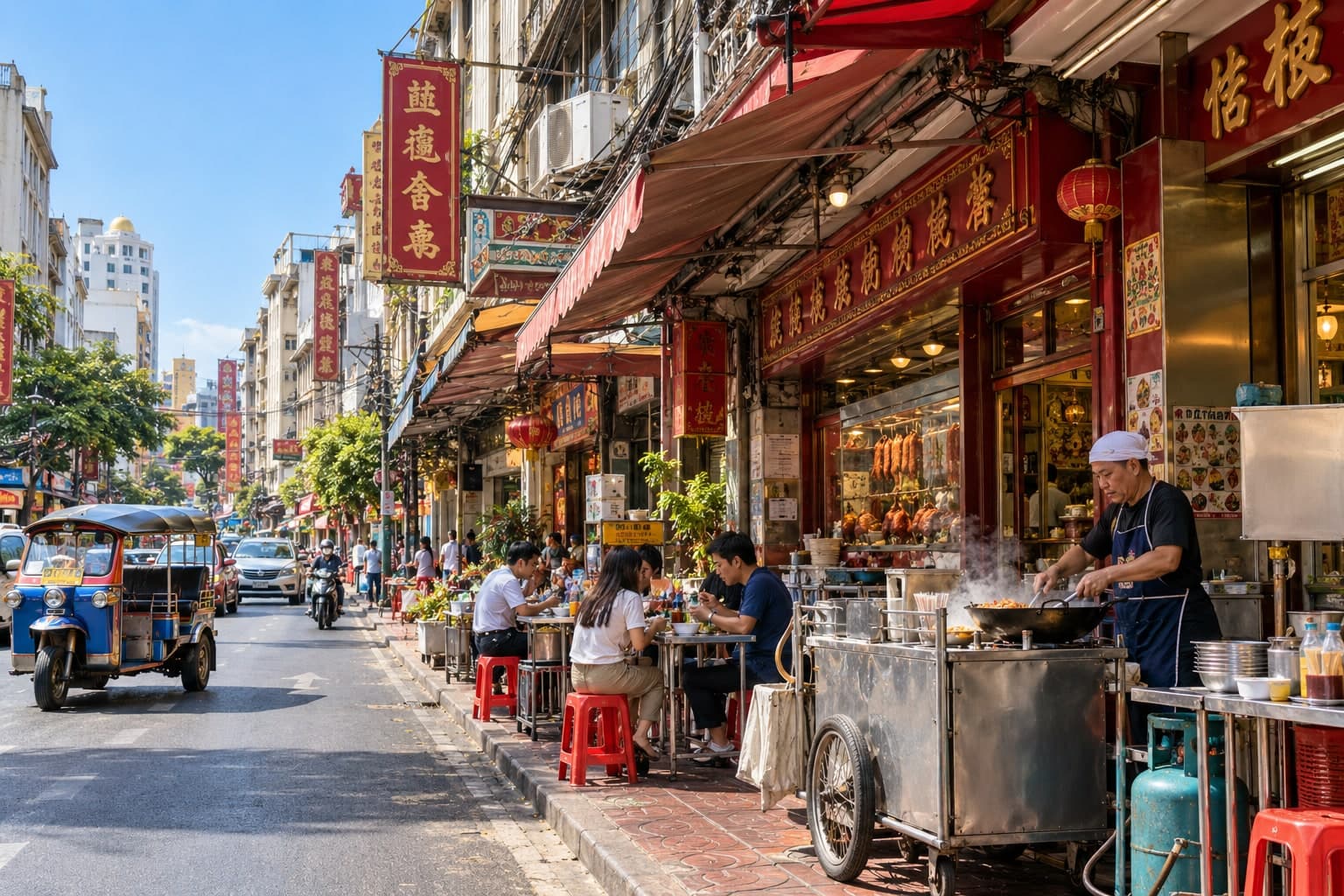
At number 935 Song Wat Road, lunch is braised goose from a family business with more than six decades behind it. Nearby, a former shophouse serves beef noodles; farther along the walk, another has become a café and gallery. Bangkok’s old trading neighbourhoods are finding new uses for their buildings, while businesses that helped give these streets their character carry on.
Walk from Song Wat into Talat Noi and that overlap becomes the subject of the afternoon. There are coffee counters and painted walls, but also workshops, Chinese shrines and narrow lanes opening onto the Chao Phraya. The route below follows them from the Ratchawong end of Song Wat to River City Bangkok, with lunch and a riverside seat along the way.
The short version
- Start at Ratchawong and follow Song Wat towards Talat Noi.
- Urai’s braised goose and Rong Klan Nuea’s beef noodles offer two distinct lunches.
- Visit the museum and shrines for the neighbourhood beyond its cafés.
- Finish with a riverside drink or the galleries at River City Bangkok.
A trading street with another life
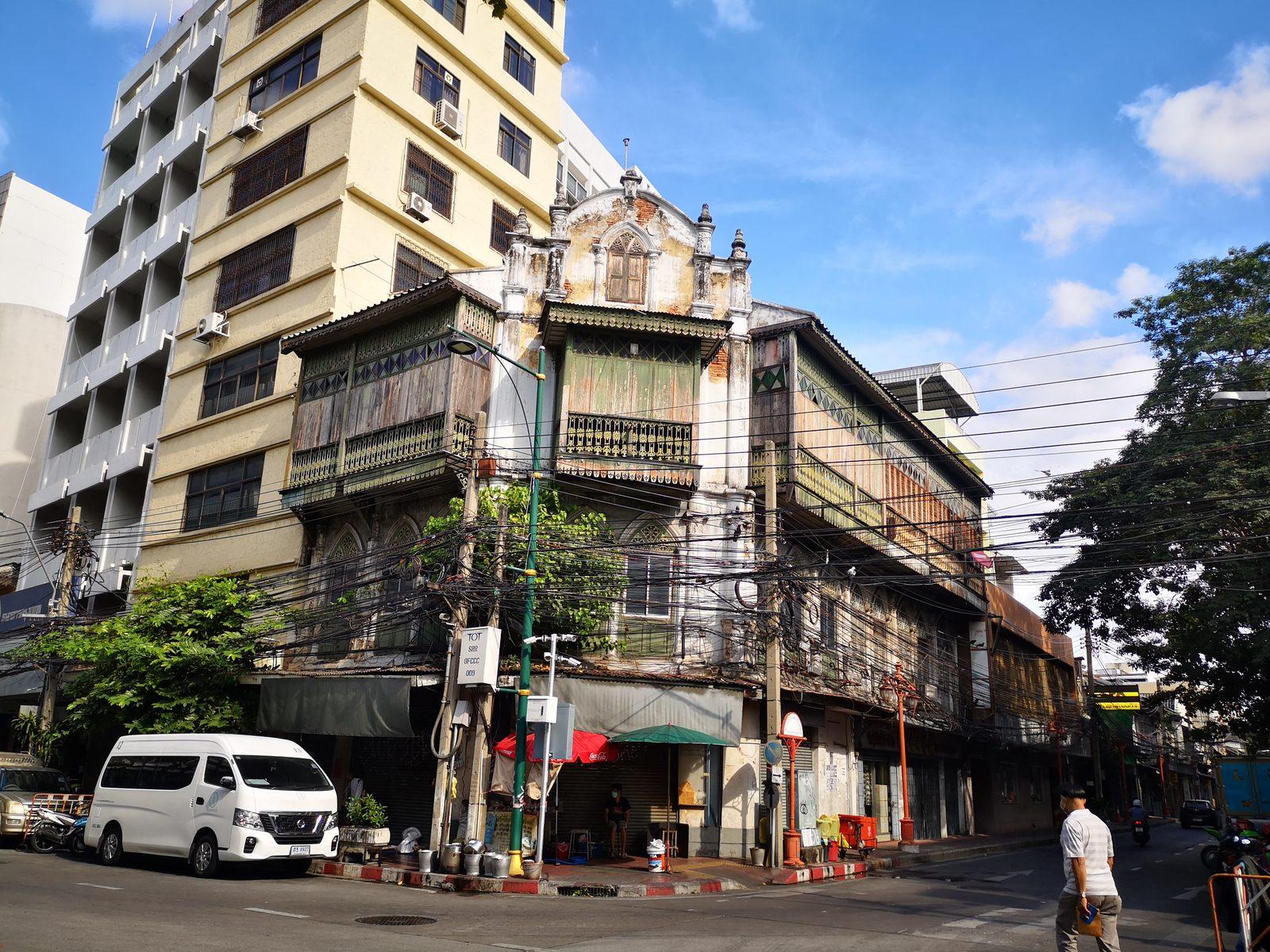
Song Wat’s position beside the Chao Phraya made it a commercial address long before it became a café destination. The Nation traces the road’s creation to the rebuilding that followed the Sampheng fire of 1906. Its warehouses and shophouses belong to that history of goods arriving, changing hands and moving inland.
Begin at the junction with Ratchawong Road and follow Song Wat towards Khao Lam. The pleasure here is in the street as a whole: the scale of the shopfronts, warehouse openings and newer businesses fitted into older premises. Deliveries still need room to pass. A walk through Song Wat includes the working day as well as the places designed for visitors.
Coffee in blue-and-white china
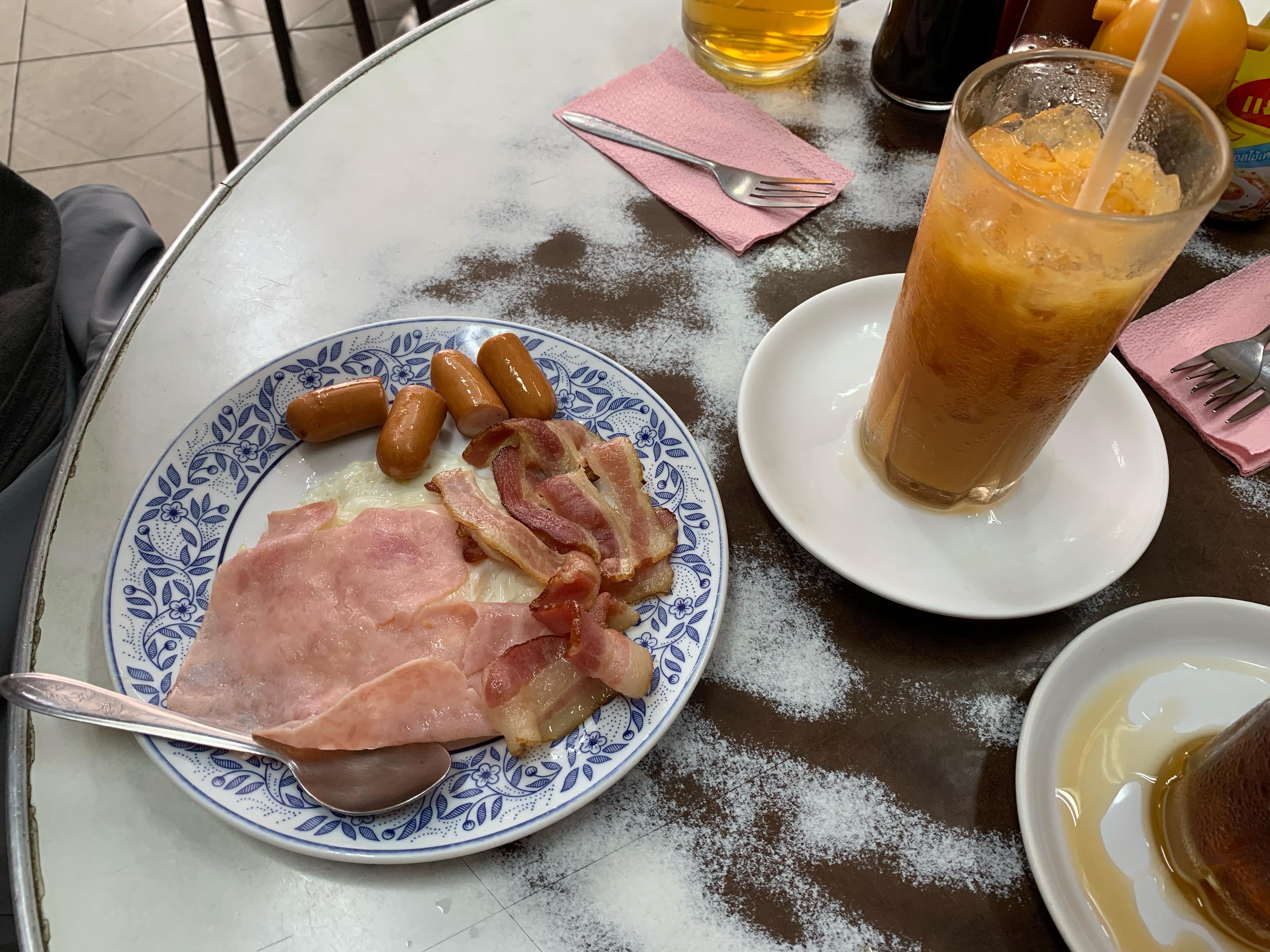
Song Wat Coffee Roasters, at 576–578 Song Wat Road, is an early stop on the route. Its wooden furniture and blue-and-white cups give the room a connection to the surrounding Thai-Chinese streetscape; the coffee selection and pastries belong to the newer café scene.
Coffee with a canelé or croissant makes a small first stop before lunch. The room is part of the appeal, so this is a place to sit rather than collect a takeaway and hurry on. Beyond it, the road continues towards the cluster of food shops around Urai and Rong Klan Nuea.
Lunch: a goose specialist or a bowl of beef noodles
Urai Braised Goose, at 935 Song Wat Road, has the stronger claim on a first lunch here. The family has spent more than sixty years cooking goose with spices, according to the MICHELIN Guide, and the small menu keeps the attention on that speciality. A plate to share gives you a reason to stop at a business whose history predates the neighbourhood’s recent popularity.
Rong Klan Nuea, at 937–939, offers a different meal: noodles in braised-beef broth inside a repurposed shophouse. Choose it if you would rather settle over an individual bowl. These are neighbouring alternatives, so there is no journey across town involved in changing your mind. Urai’s limited production makes an earlier lunch the more sensible bet.
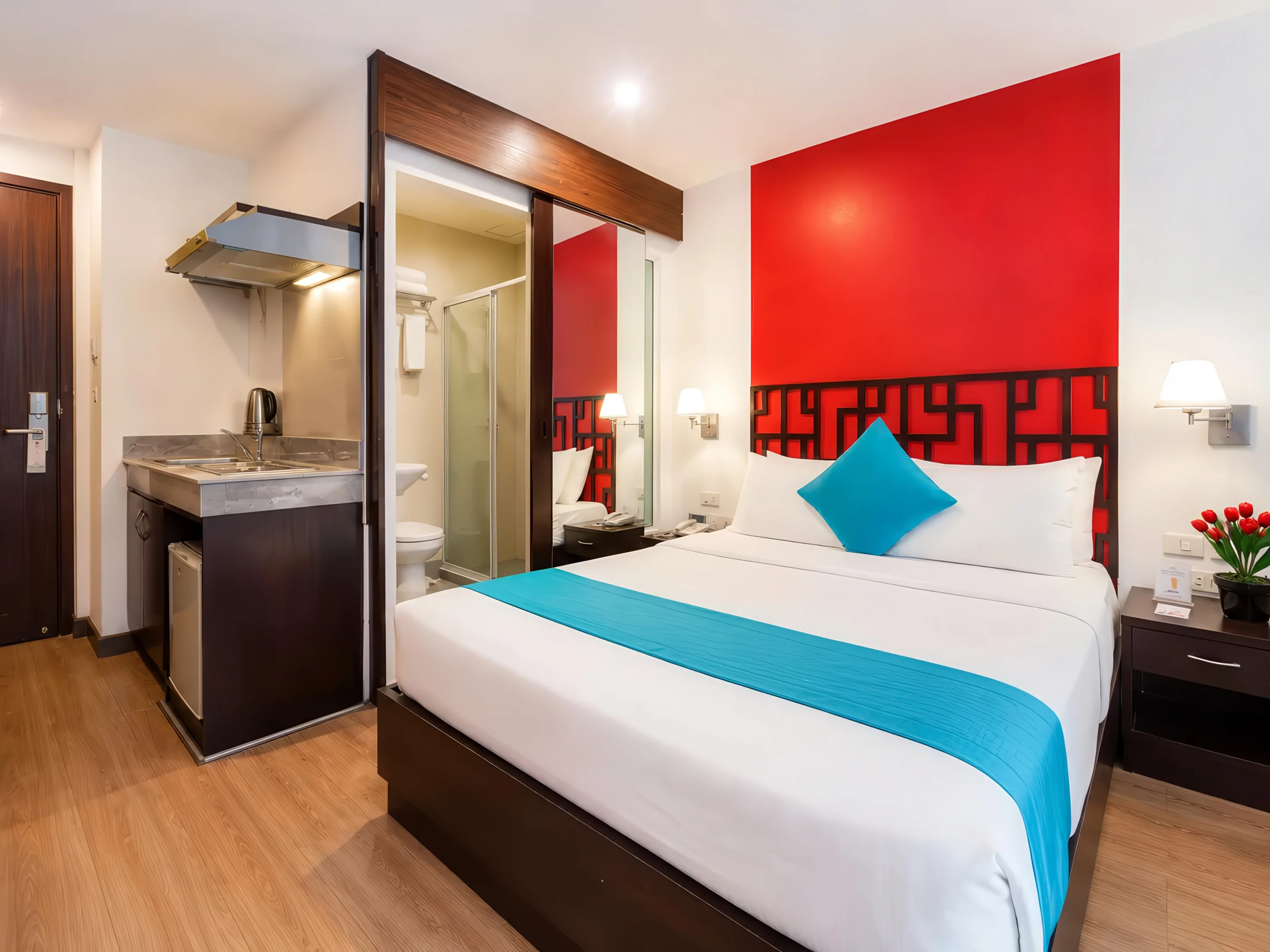
Where to stay
Arawana Express Chinatown
Compare the room options and direct rates for your dates.
Into the workshop lanes of Talat Noi
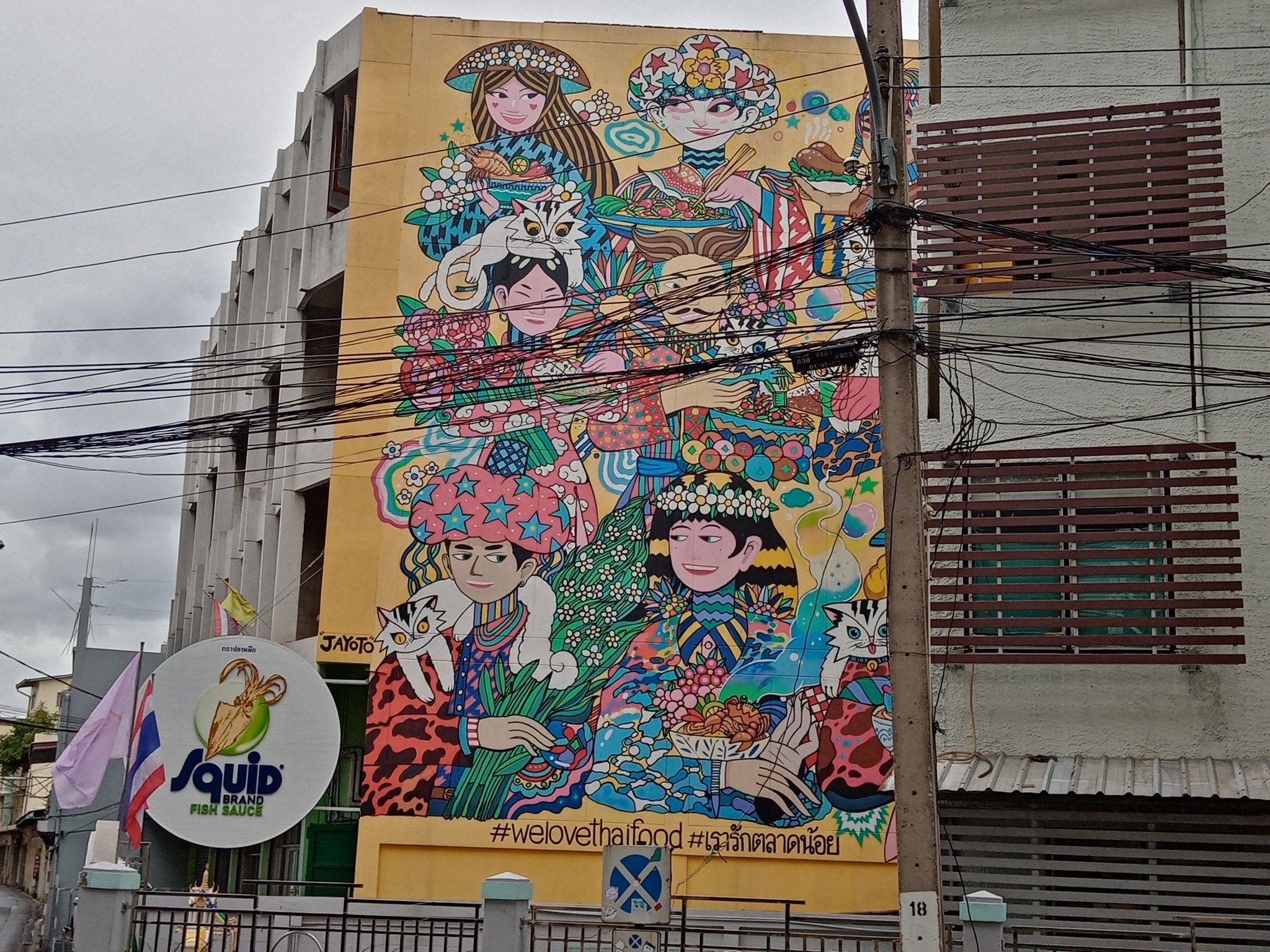
Beyond Song Wat, use Soi Wanit 2 as the thread through Talat Noi. The lanes mix homes, repair businesses and street art. Their interest lies partly in that proximity: a painted wall is one address among many, rather than the entrance to a separate arts district.
For context, the Talat Noi Museum on Soi Phanurangsi is worth a detour. TAT describes its building as a former lathe workshop making components for boats, machinery and rice mills. Its community-history displays put the area’s industrial work alongside the family and religious life that a café itinerary can miss.
Chow Sue Kong and the Hokkien community
Chow Sue Kong Shrine stands near the river on Soi Phanurangsi. Its association with Talat Noi’s Hokkien Chinese community adds another layer to the neighbourhood: this was a place where people settled, worshipped and built institutions, as well as traded.
The shrine deserves its own pause between the museum and the cafés. Look at the roofline and entrance before continuing towards the water. Worship takes priority over sightseeing; during ceremonies, a quiet look from outside may be the appropriate visit.
Two cafés, two views of Talat Noi
Timo and Tintin, at 674 Soi Wanit 2, uses the height of an old five-storey shophouse. The café and gallery have playful line drawings and a small rooftop looking over the neighbourhood. It suits someone interested in the buildings and lanes as much as the coffee.
Hong Sieng Kong is the choice for time beside the Chao Phraya. Its restored riverside compound puts old buildings, antique furniture and open-air seating together. Reporting on its opening describes the owners’ interest in giving the historic buildings a new use. Stay for a drink here if the walk has left you wanting a longer look at the river.
Rong Kueak, then the riverfront
Continue through the lanes to Rong Kueak Shrine, also known as Hon Wong Shrine. It is a separate place from Chow Sue Kong, with its own entrance and riverside setting. Keeping both on the route makes room for Talat Noi’s religious life alongside its more photographed café interiors.
From here, River City Bangkok makes a natural final destination. Its galleries, exhibitions and antiques businesses bring the walk into another kind of commerce. See what is showing before going inside; the riverfront is an equally good reason to finish here. The walk begins with old trading buildings and ends where art and antiques are still bought and sold.
Ways to string it together
The walk, in order
- Ratchawong junction and Song Wat Coffee Roasters.
- Lunch at Urai or Rong Klan Nuea, then continue towards Soi Wanit 2.
- Talat Noi Museum and Chow Sue Kong; a café stop at Timo and Tintin or Hong Sieng Kong.
- Rong Kueak Shrine, then River City Bangkok.
Planning your visit
- A half-day on foot
- Allow a half-day for this suggested route, including lunch and coffee. Song Wat alone makes a shorter outing; the full walk continues through Talat Noi to River City.
- Opening days
- TAT lists Talat Noi Museum as closed on Mondays and major Chinese community festivals. Café and restaurant hours vary, so check your chosen lunch stop before setting off.
- Getting there and back
- Wat Mangkon MRT serves the Chinatown end. River City is a useful pickup destination at the other end; boat services depend on the pier and operator.
For a stay within Chinatown, Arawana Express Chinatown puts the starting neighbourhood close at hand. Save the neon and street-food stalls of Yaowarat for the evening. Song Wat and Talat Noi reward the daylight hours, when the buildings and the businesses inside them are easier to see.

Written by
Busaba Boonmee
Guest Manager, Arawana Group
Busaba is Arawana Group’s Guest Manager. She works with the front desk teams on bookings, arrivals and guest stays.
Photo credits & fine print
- Street art on a wall in Talat Noi, Bangkok: Phoebus 28, CC BY-SA 4.0. The page layout may crop the displayed frame.
- Shopfronts and traffic along Song Wat Road in Bangkok: Phoebus 28, CC BY-SA 4.0. The page layout may crop the displayed frame.
- Coffee and a pastry served in blue-and-white china at Song Wat Coffee & Roasters: Song Wat Coffee & Roasters, Used with permission. The page layout may crop the displayed frame.
- Several bowls of beef and broth on a red table at Rong Klan Nuea: Rong Klan Nuea, Used with permission. The page layout may crop the displayed frame.
- Diners at tables beneath Rong Klan Nuea’s red storefront sign: Rong Klan Nuea, Used with permission. The page layout may crop the displayed frame.
- Exterior of Chow Sue Kong Shrine in Talat Noi: Chainwit., CC BY-SA 4.0. The page layout may crop the displayed frame.
- Visitors at wooden tables in Hong Sieng Kong’s antique-filled dining space: Hong Sieng Kong, Used with permission. The page layout may crop the displayed frame.
- Blue facade and open entrance of Hong Sieng Kong: Hong Sieng Kong, Used with permission. The page layout may crop the displayed frame.
- Rong Kueak Shrine in the Talat Noi neighbourhood: Chainwit., CC BY-SA 4.0. The page layout may crop the displayed frame.
Researched from TAT, the MICHELIN Guide, River City Bangkok and published local reporting; updated 16 November 2026. This is a desk-researched route, not a first-person account of a visit.