Bangkok has one of the largest Chinatowns in the world, and for a few days each year it becomes the most concentrated street event in the country.
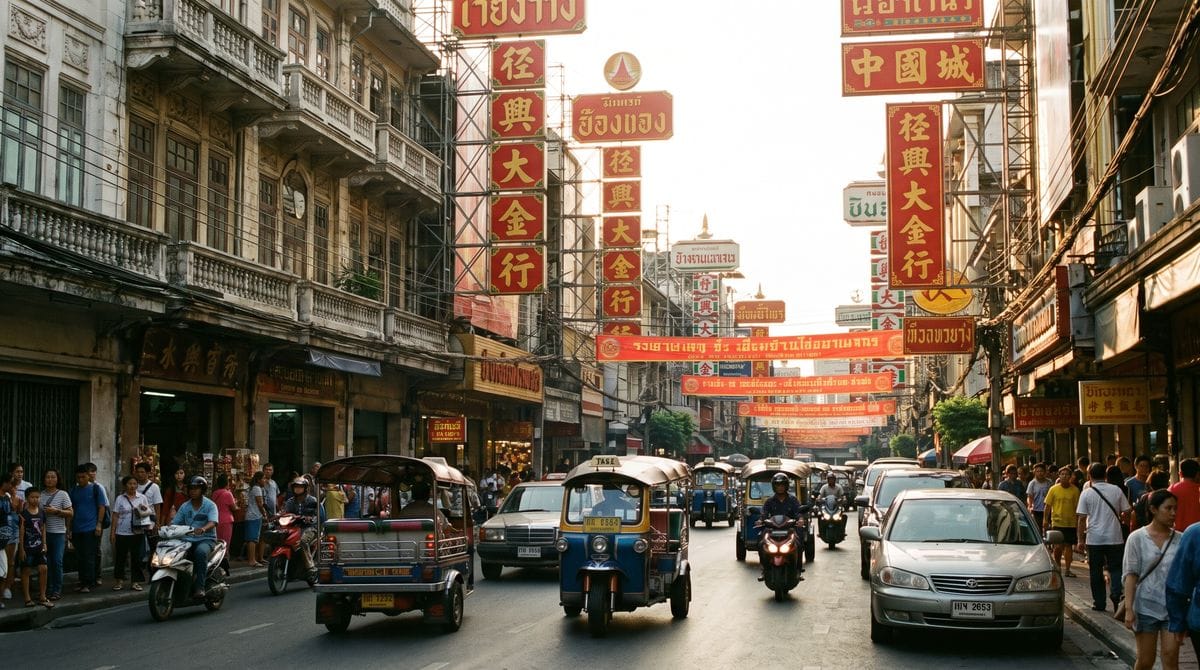
Yaowarat closes to traffic, lion dances move through the same few blocks, the gold shops glow, and several hundred thousand people try to occupy a road built for considerably fewer.
It is fantastic and it is genuinely overwhelming. The difference between those two experiences comes down to what time you arrive, which end you enter from, and how far you have to travel to your bed afterwards. Here is the practical version.
The short version
- The date moves each year between late January and mid-February, and it is not an official Thai public holiday.
- Yaowarat closes to traffic and the celebration peaks on the evening of the first day.
- Four to six in the afternoon is the window where it is lit, lively and still walkable.
- Arrive by MRT Wat Mangkon. Taxis cannot get near the closed roads.
- Carry cash in small notes and agree a fixed meeting point before you go in.
- Chinatown hotels sell out for these dates while the rest of Bangkok does not.
Before you book
Nine Arawana addresses across Bangkok and Pattaya. Reserve through us and the SMART rate applies automatically where offered, with no booking fees. Check the payment and cancellation conditions for your selected rate before confirming.
When it falls, and what the days mean
Chinese New Year follows the lunar calendar, so the date moves each year between late January and the middle of February. Check the specific date early, because it drives everything else about the trip.
It is not an official public holiday in Thailand, which surprises people. Offices and schools mostly stay open. What happens instead is that Chinese-Thai businesses close, sometimes for several days, and the celebration is concentrated in the Chinese-Thai community rather than spread across the country.
Traditionally the festival runs over three days: a shopping and preparation day, a day of paying respects at temples and to family, and a day of going out and enjoying yourself. On Yaowarat the street celebration usually peaks on the first day of the new year itself, in the evening.
Good to know
- Date moves: late January to mid-February
- Not an official Thai public holiday
- Many Chinese-Thai businesses close for days
- Street celebration peaks on the evening of day one
What actually happens on Yaowarat
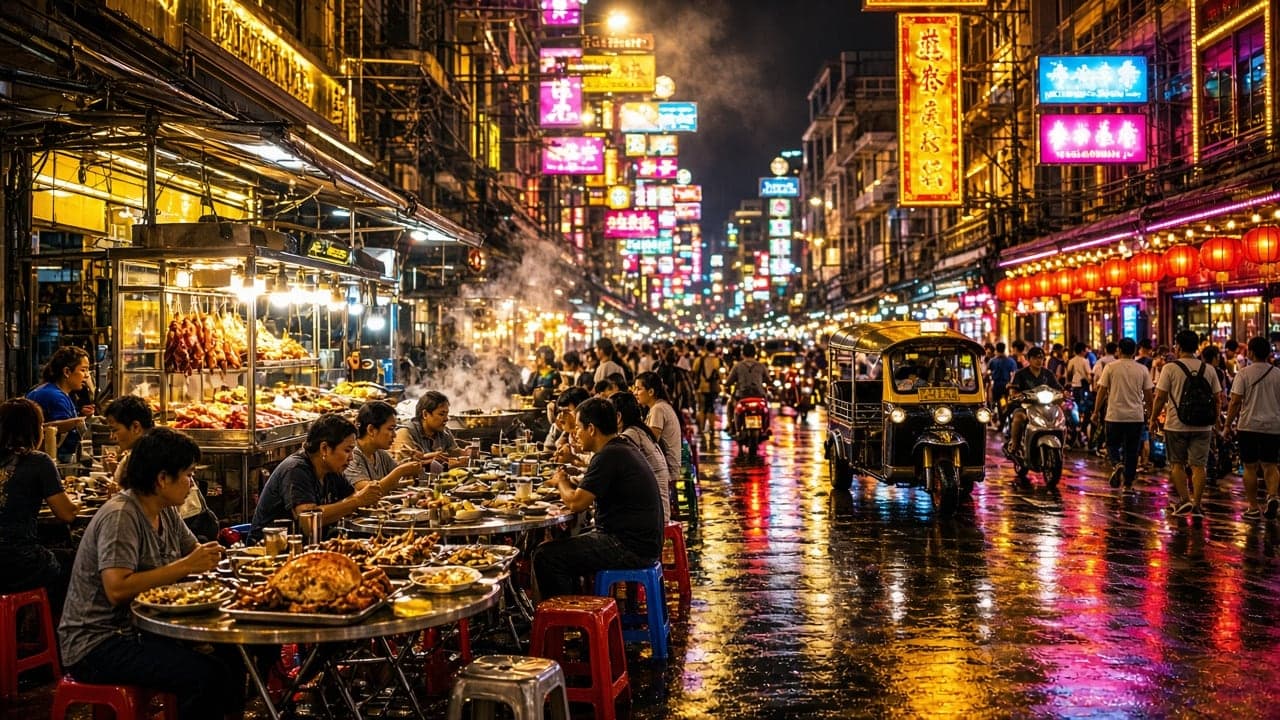
The main stretch of Yaowarat Road is closed to traffic and given over to the crowd. Red lanterns go up along its length, stages appear, and lion and dragon dance troupes work their way through the district accompanied by drums you will hear several streets before you see them.
The food, which is the reason to be in Chinatown on any night of the year, goes up several gears. Stalls that normally open in the evening run longer and busier, and the side sois off the main road are where the better eating usually is once the centre becomes impassable.
The temples are the other half. Wat Mangkon Kamalawat is the largest Chinese temple in the district and fills with people making offerings, burning incense and lighting candles. It is smoky, crowded and one of the most atmospheric things you can see in this city.
Good to know
- Yaowarat closes to traffic, lanterns full length
- Lion and dragon dances through the district
- Side sois eat better than the main road
- Wat Mangkon fills with offerings and incense
Timing, which is the whole thing
The crowd is not constant. Late afternoon and early evening, from about four to six, the lanterns are up and lit, the stalls are open, the dances have started, and you can still move. From about seven onwards the density rises sharply and by eight, on peak night, walking the main road becomes a slow shuffle.
So go early and stay late, or go late and skip the middle. What does not work is arriving at eight with a plan, because you will not execute it. If you are travelling with children or anyone who dislikes crowds, treat six o'clock as your hard limit on the main road and move to the side streets after that.
The morning is a completely different and underrated option. Chinatown before ten, in the days around the new year, is decorated, calm, and full of preparation rather than performance. The gold shops are busy, the temples are working, and you can actually see the architecture.
Good to know
- Four to six is the good window
- After seven the main road becomes a shuffle
- Side sois stay passable longer
- Mornings are decorated, calm and underrated
Where to stay
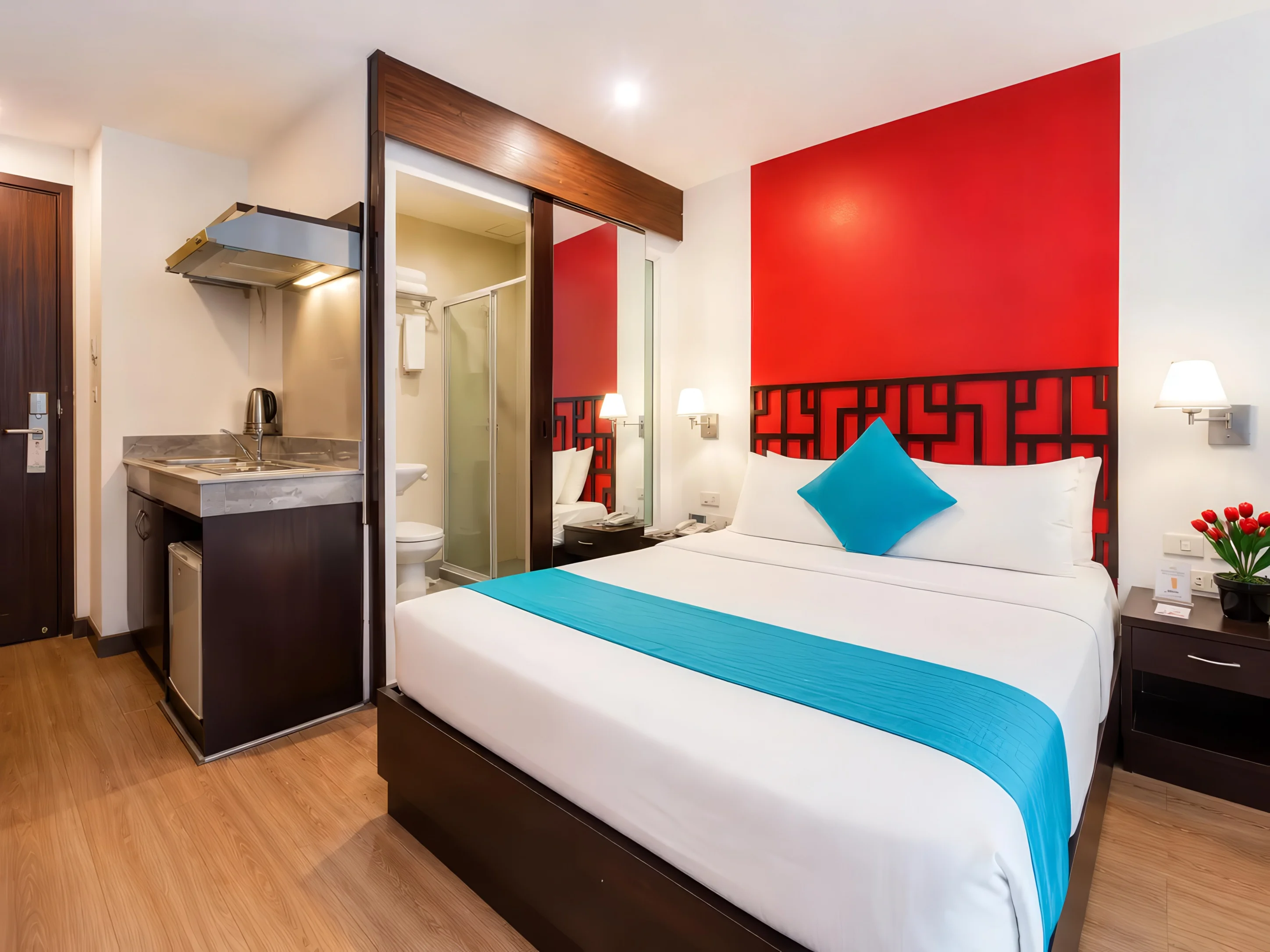
Arawana Express Chinatown
Express Chinatown if Yaowarat is the reason you came. Sukhumvit if you want festival evenings and quieter nights.
Getting in and out
MRT Wat Mangkon is the station, and it changed Chinatown completely when it opened. It puts you at the top of the district, and it is by a wide margin the best way in and out on a peak night. Do not attempt to arrive by taxi: the roads around Yaowarat are closed or gridlocked and you will be dropped further away than the station would have left you.
The other approach is by river. Ratchawong Pier is a short walk from the main road, and arriving on a Chao Phraya boat is a genuinely enjoyable way to reach the district on an ordinary evening. On peak night the piers are busy too, so treat the MRT as the reliable option.
Going home, the station is also where everyone else will be. If you are staying nearby you can simply walk out of the crush, which is the argument for sleeping in the district. If you are not, leave before the end rather than with everyone else.
Good to know
- MRT Wat Mangkon is the way in and out
- Do not try to arrive by taxi
- Ratchawong Pier for the river approach
- Leave before the end, not with the crowd
Practical things that make the night better
Carry cash in small notes. Bangkok has otherwise gone substantially cashless, but the street stalls specifically have not, and standing in a queue discovering this is a poor use of a festival evening.
Agree a meeting point before you go in, and pick something immovable like a temple gate or a station exit rather than a stall. Phone signal in a crowd of that density is unreliable, and groups do get separated. Carry very little, and carry it in front of you.
One more that catches visitors out: the incense smoke at the temples is thick, and if anyone in your party has asthma or similar, the interior halls on a peak evening are worth admiring from outside. And do not plan a temple marathon for the morning after the busiest night, because you will not do it.
Good to know
- Cash in small notes, the stalls need it
- Agree a fixed meeting point, not a stall
- Signal fails in dense crowds
- Incense smoke is heavy inside the temples
Sleep in Chinatown, or ride in
If Yaowarat is the reason you planned this trip, sleep in the district. Arawana Express Chinatown is within walking distance of the main road, which means you can step out, look at the crowd, and decide whether to commit, and, more importantly, walk home when you have had enough rather than negotiating transport at the edge of a closed road.
That ability to leave on your own terms is worth more on this specific night than almost any other feature of a hotel. It also means you can go twice: an hour in the afternoon and an hour late, with a rest in between.
If the festival is one evening of a longer Bangkok trip, stay on Sukhumvit and ride in on the MRT for the peak hours. Arawana Express Sukhumvit 22 or Arawana Regency Park Sukhumvit give you quiet nights and a train to the festival, which suits most people better than they expect.
Good to know
- Festival is the trip: sleep in Chinatown
- Walking home beats finding transport
- Staying close lets you go twice in one day
- One evening of a longer trip: stay on Sukhumvit
Booking, and what sells out
The constraint at Chinese New Year is not Bangkok, it is Chinatown. The rest of the city books much as it does in any February. The hotels within walking distance of Yaowarat fill first and fill hard, because everyone has the same idea about not wanting to travel home afterwards.
So if the district is where you want to be, book as soon as you know the date. And as with every busy date, the useful room types go before the standard ones: twins, family configurations and quiet floors disappear while a hotel still shows availability.
Ask for a quieter room if you are a light sleeper. Chinatown is a working district that is loud in the evening and starts early in the morning, and that is true year-round, not only during the festival.
Good to know
- Chinatown sells out, the rest of the city does not
- Book as soon as the date is known
- Twins and family rooms go first, as always
- Ask for a quiet room, the district starts early
Ways to string it together
The two-visit day
The way to see the festival without being crushed by it. Go twice, rest in between.
- 09:00 Chinatown in the morning: decorated, calm, gold shops busy.
- 10:00 Wat Mangkon and Wat Traimit before the crowds.
- 11:30 back to the hotel through the middle of the day.
- 16:00 return as the lanterns light and the dances start.
- 18:00 eat in the side sois rather than on the main road.
- 19:30 leave before the peak density, or move away from Yaowarat itself.
If you are coming in from Sukhumvit
One evening, in and out by train, no transport problems.
- Take the MRT to Wat Mangkon, arriving around four.
- Walk the main road while it is still passable.
- Eat early, in a side soi, before the stalls have queues.
- Be back at the station by about half past seven.
Planning your visit
- Check this year's date first
- The festival follows the lunar calendar and moves between late January and mid-February. Everything else, including whether Chinatown accommodation is available, follows from that date.
- Bring cash, in small notes
- The street stalls are cash-only in a city that is otherwise largely cashless. Break your notes before you arrive, because nobody at a busy stall wants to make change for a thousand baht.
- Fix a meeting point before you go in
- Pick something that cannot move or close, like a station exit or a temple gate. Phone signal is unreliable in a crowd that dense and groups genuinely do get separated.
- Do not schedule anything for the next morning
- A peak festival evening in Chinatown is more tiring than it sounds. Leave the following morning open rather than booking a temple tour you will want to skip.
- Eat in the side streets
- The sois running off Yaowarat have the same food with a fraction of the queue once the main road fills. Turning off the main drag is the single easiest upgrade to the evening.
Chinese New Year on Yaowarat is one of the best nights in the Bangkok calendar, and almost everything that goes wrong with it is a logistics problem rather than a crowd problem. Come in the afternoon, arrive by MRT, eat off the main road, carry cash, and give yourself a way home that does not involve a taxi at a closed junction. Book Arawana Express Chinatown if the festival is the reason for the trip, or stay on Sukhumvit and ride in. The rest of the district, on ordinary days, is covered in A local's guide to Chinatown.

Written by
Nalinee Boonmee
Guest Manager, Arawana Group
Nalinee leads guest experience across all eight Arawana properties. She works with each front desk team so bookings, check-ins, and day-to-day stays run smoothly.
Written with the desk at Arawana Express Chinatown, who work through this every year. The date moves annually and road closures and event programming are announced locally close to the time, so confirm the specifics for your dates.